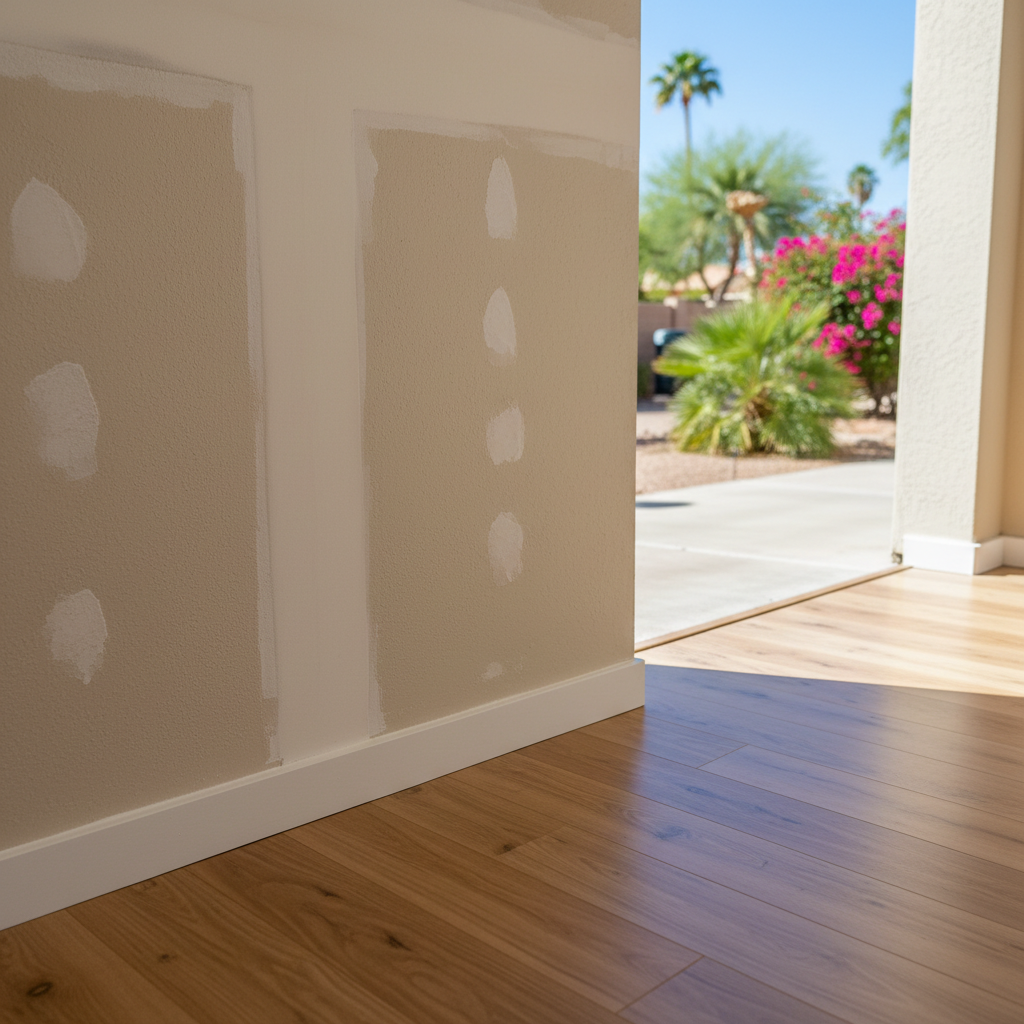
When you walk into your kitchen or hallway and find standing water where it definitely should not be, Water Damage Restoration in Gila Bend, AZ must begin right away. Water damage moves fast, and out here in Gila Bend, our dry desert heat does not mean moisture just evaporates safely on its own. When a supply line bursts or a heavy summer monsoon drives water under your doors, you have a narrow window to act before warping, rot, and mold start settling into your drywall and framing.
Before you touch a single towel or plug in a fan, safety comes first during Water Damage Restoration. Shut off your main water valve if the source is internal, and cut power to the affected room if water is anywhere near outlets or baseboard heaters. Do not go wading through standing water if there is any chance it is energized. Once the power is off and you are safe, take a breath and assess how bad the damage really is.
You can realistically handle small spills and minor overflows yourself when performing basic Water Damage Restoration. Grab a wet-dry shop vacuum, pull up wet area rugs, and start mopping up whatever pooling water you can see. If it is just a small patch of damp tile or concrete, setting up a few household fans and opening up doors when the weather permits might do the trick. But keep in mind that Gila Bend caliche soil and tight slab foundations mean moisture can easily get trapped under flooring materials, creating hidden pockets of humidity.
That is usually when you need to hand things over to a professional crew like Diamond Restoration Service for Water Damage Restoration. If water has wicked up more than a couple of inches into drywall, soaked into insulation, or sat on your floors for over 24 hours, standard box-store fans will not cut it. Diamond Restoration Service brings in heavy-duty industrial air movers, dehumidifiers, and moisture meters that let us check behind walls and under cabinets without tearing your whole house apart. Trying to dry out a major leak with a couple of oscillating fans from the garage will usually leave moisture trapped where you can not see it, which leads to structural damage down the road.
After you have cleared out the standing water and the pros have set up their drying equipment, your main job is monitoring the Water Damage Restoration progress. Keep doors closed in the drying zones so the commercial dehumidifiers can pull moisture directly out of the structure instead of fighting the outdoor humidity. Empty drip pans if needed, and give the equipment room to breathe. Taking care of the water right away saves you from massive repair bills later on.